
Column-A One-Second Power Flicker Could Scrap an Entire Batch: Actron and Billion Build the Final Line of Defense for Manufacturing
Billion Electric • October 30, 2025
Global Views Monthly, Reported by Yi Kuo. Updated: 2026/03/04
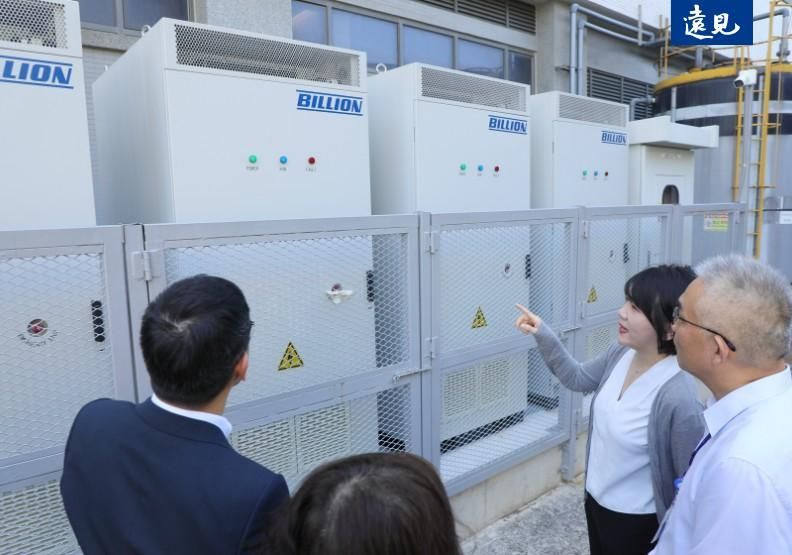
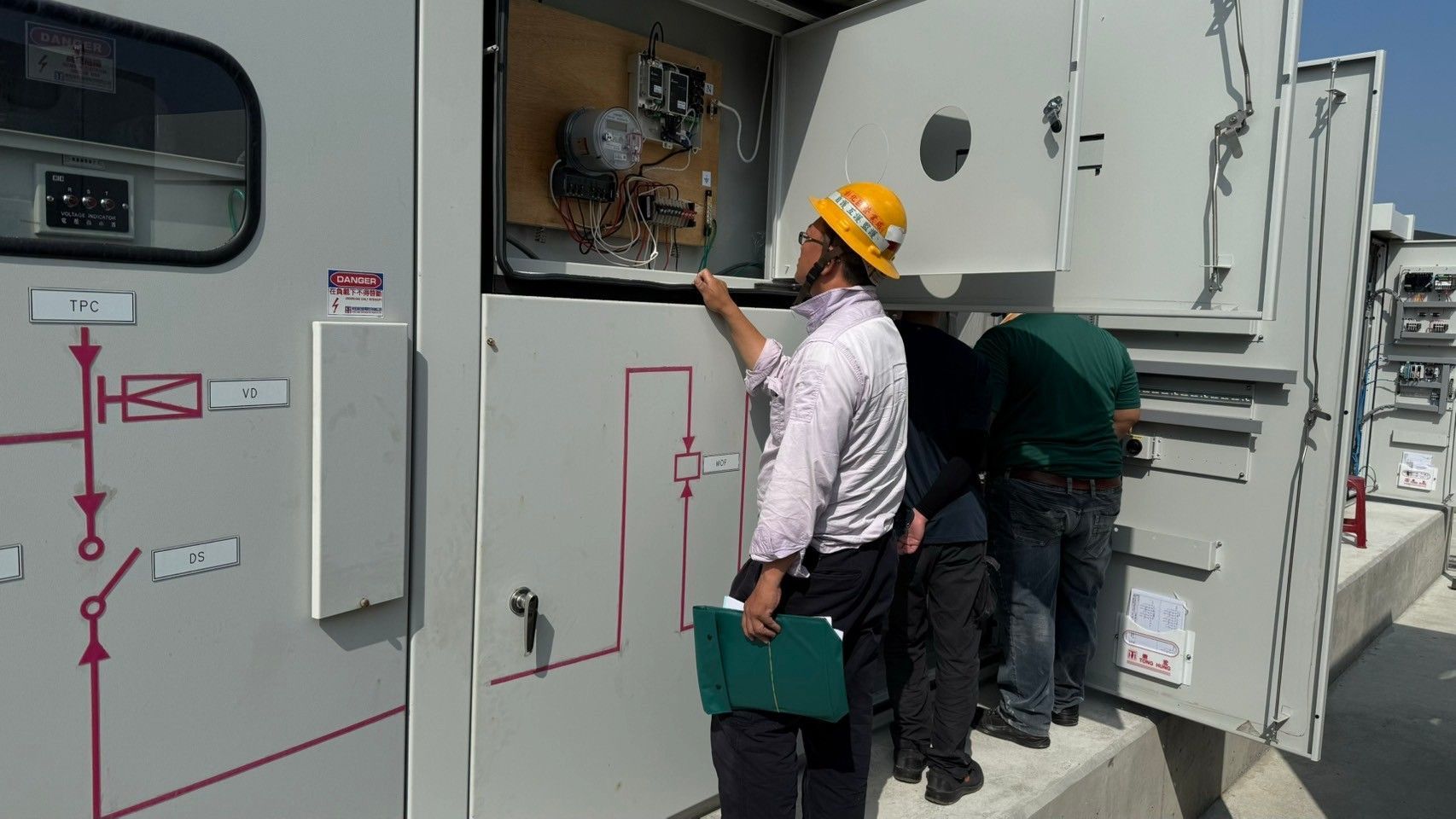
▲ Actron collaborated with Billion Electric and Billion Watts Green Energy, both under the Sino-American Silicon Products group, to build the energy storage project. Photo: Su Yi-Chieh / Global Views Monthly.
Automotive
semiconductor manufacturer Actron Technology has strengthened its power resilience by deploying a behind-the-meter (BTM) energy storage system, ensuring the stability of its 24-hour production lines. As grid capacity tightens, electricity prices rise, and carbon management pressures grow, Actron partnered with Billion Electric and Billion Watts, both part of the Sino-American Silicon Products group, to develop an on-site energy storage project that delivers both power stability and cost efficiency. More than just an energy-saving investment, the project represents a key step for Taiwan’s manufacturing sector entering a new era of corporate energy management.
Late at night, the headquarters of Actron Technology in Nankan, Taoyuan remains brightly lit. Production lines continue running around the clock—machines operate continuously while testing instruments flicker under the dim factory lights. For Actron, stable electricity supply is not only about cost; it directly safeguards production yield and manufacturing continuity.
In today’s power-constrained environment, even a one-second voltage flicker during peak demand periods can cause losses worth hundreds of thousands of dollars. To mitigate grid-related risks and reduce electricity costs, Actron decided to adopt a behind-the-meter energy storage solution, with system integration support from Billion Electric Group and its subsidiary Billion Watts, both part of the Sino-American Silicon Products group.
The ongoing energy transition has introduced new uncertainties to power systems. As renewable energy penetration increases and nuclear power phases out, maintaining grid stability has become more challenging. According to Billion Electric Chairman Pedersen Chen, this is a critical moment for companies to rethink energy risk management.
“In the past, nuclear power was a major and stable source of electricity. Today, if companies rely entirely on the central grid, operational risks increase,” Pedersen explained. “Businesses can no longer depend solely on Taipower. Energy risk management must become part of their overall operational strategy.”
Pedersen Chen further noted that Taiwan’s current power demand structure leaves the grid vulnerable to unexpected disturbances. Behind-the-meter energy storage systems respond extremely quickly, making them a crucial tool for enhancing grid resilience while reducing operational risks for enterprises.
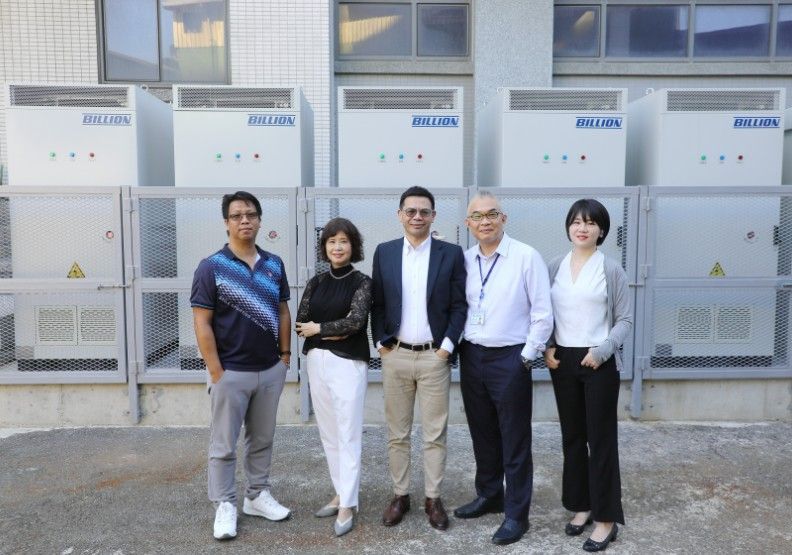
▲ From left: Lee Chen-Cheng, BillionWatts VP of Technology; Elsa Chang, General Manager of Billion Electric; Pedersen Chen, Chairman of Billion Electric; Chang Hui-Chung, General Manager of the Automotive Power Electronics Division at Actron Technology; and Elaine Chen, General Manager of Billion Watts. Photo by Su Yi-Chieh / Global Views Monthly.
A One-Second Power Flicker, Millions in Losses: Actron Turns to Energy Storage to Protect Production Yield
According to Chang Hui-Chung, General Manager of the Automotive Power Electronics Division at Actron Technology, the decision to adopt a behind-the-meter (BTM) energy storage system was driven primarily by concerns over production stability.
“We are a semiconductor manufacturer. While our electricity consumption may not be at the level of the largest industrial users, it is still significant,” Chang explained. “Our power usage increased by about 2% from last year to this year. Our production lines operate 24 hours a day, so electricity is not only a cost issue—it is also tied to carbon emissions. Reducing emissions is an important goal for the company.”
In the past, brief power disturbances from nearby substations had already caused costly disruptions. A momentary voltage dip once stopped heating equipment on the production line, resulting in scrapped materials.
“Even a one-second interruption can be disastrous,” Chang said. Such incidents occurred twice within two to three years, each causing losses of around hundreds of thousands of dollars. “If the heating curve in the production process changes even slightly, the entire batch of materials becomes unusable.”
After evaluating possible solutions, Actron decided to deploy a behind-the-meter energy storage system and adopted a collaborative model involving site provision, joint investment, and revenue sharing. Under this arrangement, Billion Electric is responsible for system construction and O&M, while Actron provides the installation site and electricity demand.
“We hope this project will help improve our power management while also enabling participation in Taipower’s ancillary services market, creating additional revenue opportunities,” Chang added.
More Than Equipment: Billion and Billion Watts Deliver a Comprehensive Energy Stability Solution
Elsa Chang, General Manager of Billion Electric, recalled that Actron was a partnership opportunity proactively initiated by Billion.
“We studied Actron’s capacity utilization and electricity consumption patterns. As a company in the automotive semiconductor sector, they are highly sensitive to factors such as exchange rate fluctuations and electricity price changes,” Chang said. “What companies truly care about is not simply purchasing equipment, but whether it can support long-term operations and generate value.”
Elsa Chang emphasized that Billion Electric and Billion Watts are not merely equipment suppliers, but providers of integrated energy management solutions. “We have hands-on experience operating real energy storage projects. That allows us to understand how to design solutions that create a win-win outcome for industrial customers,” she explained.
Elaine Chen, General Manager of Billion Watts, noted that Actron’s facility has a contracted power capacity of 3.06 MW, while the energy storage system can discharge 500 kW per hour. “The load curve is very stable. Our goal is to ensure the facility stays within its contracted capacity while improving overall power quality,” Elaine said.
To achieve this, the system charges during off-peak hours and discharges during the afternoon peak period from 4 p.m. to 10 p.m., supporting the plant’s operational demand. “Before construction, we analyzed the plant’s 15-minute electricity load data from Taipower,” Elaine Chen explained. “By integrating this data with the EMS (Energy Management System), we can remotely schedule system operations to maximize cost savings.”
At the Actron site, the behind-the-meter energy storage system operates in line with the facility’s 24-hour industrial load profile, applying an energy price shifting strategy. By avoiding high-cost peak hours and participating in Taipower’s ancillary service and electricity trading markets, the project is expected to generate over NT$1 million per year in electricity cost savings and additional revenue.
Beyond the Actron project, Billion Watts has identified growing opportunities across multiple sectors. “Textile factories, hospitals, schools, and department stores are all exploring energy storage solutions,” Elaine Chen said. “Department stores in particular experience high electricity demand during evening peak hours, and energy storage can help balance peak and off-peak loads.”
As energy storage technologies mature and lithium battery costs continue to decline, behind-the-meter energy storage is expanding beyond large manufacturers to mid-sized enterprises. According to Pedersen Chen, companies like Actron represent an ideal example. “In the past, many people believed energy storage only made sense for facilities with loads above 5,000 kW. In reality, even a 1,000 kW load can provide meaningful opportunities.”
Elsa Chang also noted that although the Actron project was designed for a 3 MW capacity, only 1 MW was installed in the initial phase. “This allows the company to first evaluate operational benefits before deciding whether to expand the system,” she said. “Once customers see improvements in power stability, electricity savings, and additional revenue, they are naturally more willing to continue investing.”
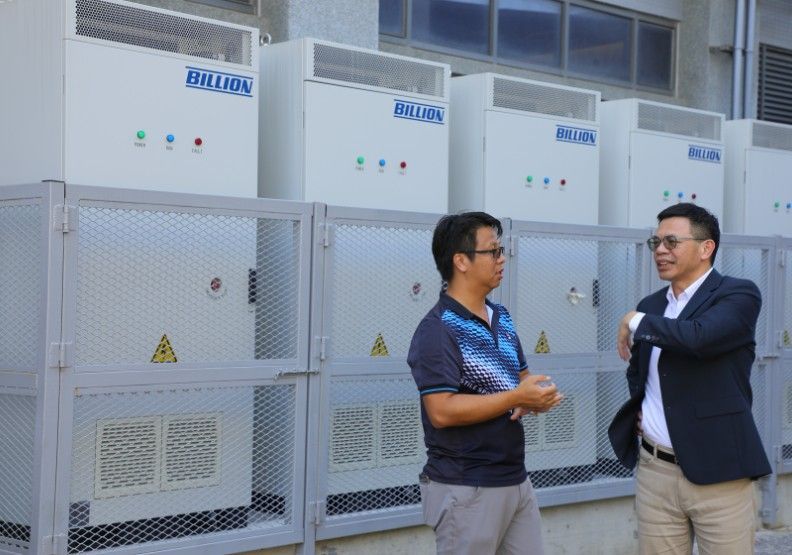
▲
Actron implemented a behind-the-meter (BTM) energy storage system in partnership with Billion Electric under a site-host, co-investment, and revenue-sharing model. Photo by Su Yi-Chieh / Global Views Monthly.
Regulation Reshaping the Market: Behind-the-Meter Energy Storage as a Foundation for Grid Resilience
While behind-the-meter (BTM) energy storage holds significant market potential, the regulatory framework still needs to catch up. Elaine Chen noted that the Energy Administration is currently drafting installation guidelines for BTM energy storage systems, and issues such as site restrictions still need to be addressed.
“Public acceptance is also a challenge,” said Elsa Chang. She believes energy storage should be viewed as national infrastructure, with the government taking the lead in promoting it while educating the public. “Safety standards can certainly be strict, but legitimate operators must also be allowed to carry out projects.”
Elaine Chen added that energy storage facilities are subject to multiple third-party inspections covering fire safety, noise control, and electromagnetic emissions. “In fact, the electromagnetic radiation levels are even lower than those of a household hair dryer.”
Wu Chih-Wei, Deputy Director-General of Taiwan’s Energy Administration, explained that the National Fire Agency under the Ministry of the Interior has drafted Fire Safety Regulations for Behind-the-Meter Energy Storage Systems, which are expected to be submitted to the Legislative Yuan for review later this year.
As electricity tariffs gradually adjust and the price gap between peak and off-peak periods widens, the economic incentives for BTM energy storage are strengthening rapidly. Starting from individual projects, partnerships between enterprises are driving this emerging market forward. Beyond business opportunities, it is also becoming an important part of sustainable operations.
As Billion Electric Chairman Pedersen Chen summarized: “Behind-the-meter energy storage is a key tool for strengthening grid resilience and represents a new approach to energy governance.”
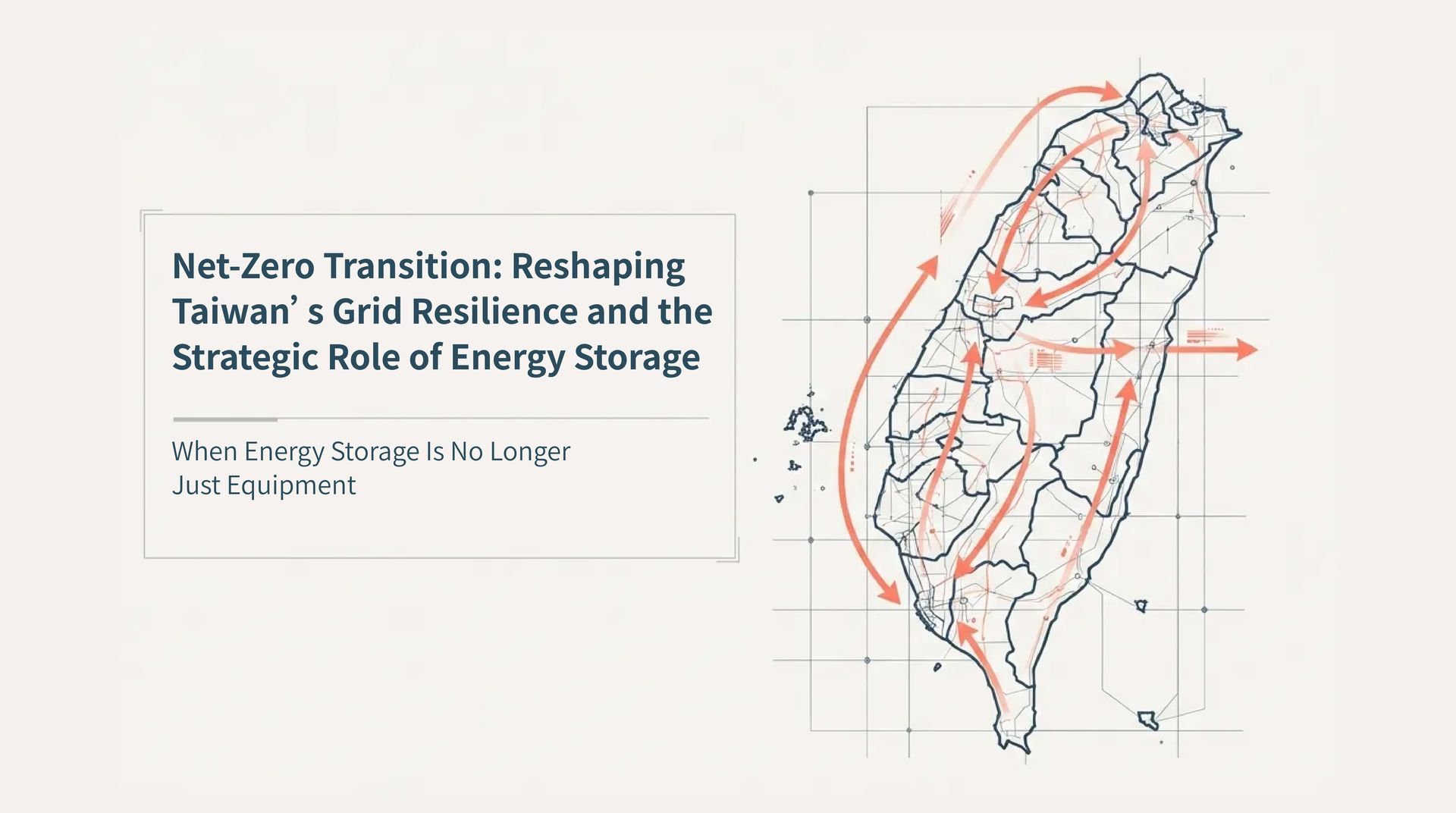
Taiwan’s behind-the-meter ESS is evolving from backup equipment into a key tool for energy resilience, renewable integration, and smarter business power management.

Exploring energy storage trends and how NoonSpare’s EMU and Proteus Energy Storage System help businesses reduce electricity costs and improve power reliability.

Committed to driving industry upgrades through green energy and promoting environmental sustainability as a core mission, we leverage advanced technology to revolutionize traditional industries, creating a cleaner and more sustainable future.
According to the Green Energy Industry Innovation promotion plan proposed by the Executive Yuan, the future promotion of the Green Energy industry will focus on "energy conservation, energy creation, Energy Storage and system integration, aiming to develop Taiwan into a clean, safe, and innovative new energy nation.